

Is Your Business Prepared for the Unexpected?
When most businesses think about emergency preparedness, they focus on physical tools—smoke detectors, fire extinguishers, security cameras, and emergency exits.
But one critical piece is often overlooked: fast, reliable voice communication.
In an emergency, the ability to instantly contact 911 and communicate with everyone in your building can make the difference between chaos and control.
If you’re considering replacing traditional desk phones with mobile softphones, it’s important to understand how that decision impacts your emergency readiness.
The Hidden Risk of Softphone-Only Environments
Softphones (apps on smartphones or computers) offer flexibility—but they introduce serious limitations when it comes to emergency response:
- They are not always on or accessible
- Devices may be locked, muted, or out of battery
- Users may be working from different or changing locations
- 911 location data may be inaccurate or outdated
In an emergency, these gaps can delay response times or prevent help from reaching the right location.
What Emergency Readiness Really Means
True emergency readiness isn’t just about having the right equipment—it’s about immediate, reliable communication.
Your business needs the ability to:
- Instantly connect with 911 emergency responders
- Quickly notify employees, customers, and guests
- Deliver clear instructions across your entire facility
This is essential for situations like:
- Security threats (intruders, bomb threats)
- Medical emergencies (heart attacks, injuries, asthma attacks)
- Severe weather (tornadoes, lightning, storms)
- Fires, gas leaks, or electrical hazards
The 4 Essential Emergency Communication Tools
To ensure your business is fully prepared, your communication system should include these four key components:
1. Always-On Emergency Desk Phones
Strategically placed desk phones provide instant access to emergency communication when it matters most.
- No login required
- Always powered and ready
- Can initiate both 911 calls and facility-wide alerts
These phones act as dependable, fixed communication points throughout your building.
2. Accurate 911 Location Information (E911)
When someone dials 911, responders need precise location data—immediately.
A properly configured system ensures:
- Calls are routed directly to emergency services
- Accurate, up-to-date address information is transmitted
- Additional details (suite, floor, etc.) are included when needed
Without this, emergency responders may lose valuable time trying to locate the caller.
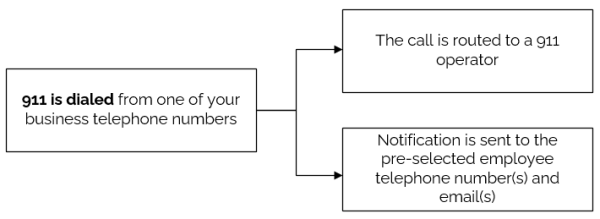
3. Instant 911 Notifications to Your Team
When a 911 call is made, your internal team should know right away.
With automated notifications, you can:
- Alert designated staff via phone call and/or email
- See which phone/user initiated the call
- Quickly coordinate internal response efforts
This ensures your team can assist, guide responders, and manage the situation in real time.
4. Facility-Wide Emergency Paging
In many emergencies, communication inside your building is just as important as contacting 911.
A well-designed paging system allows you to:
- Broadcast emergency messages instantly
- Reach every area of your facility, including:
- Break rooms
- Warehouses
- Hallways
- Storage areas
- Emergency shelters
This can be achieved through all-call paging phones and/or overhead speaker systems, ensuring no one is left uninformed.
Best Practices for Emergency Phone Placement
To maximize effectiveness, emergency communication tools should be thoughtfully placed throughout your facility:
- Emergency phones should be visible and accessible
- Devices should be located no more than 40 feet apart
- Paging coverage should ensure clear audio in all areas
The goal is simple: anyone, anywhere, can act immediately in an emergency.
Staying Compliant with E911 Regulations
Modern businesses are also required to meet federal safety standards for emergency communications.
A compliant system helps you adhere to:
Kari’s Law
- Requires direct dialing of 911 (no prefixes like “9” needed)
Ray Baum’s Act
- Requires dispatchable location information for every 911 call
This includes:
- Street address
- Suite or unit number
- Floor or specific location details
Staying compliant isn’t just about avoiding penalties—it’s about ensuring responders can find you without delay.
Why Emergency Communication Should Be a Priority
In an emergency, every second counts.
While mobile technology has changed how we communicate day-to-day, reliable, location-based voice communication remains essential for safety.
The most prepared businesses take a balanced approach:
- Leveraging modern tools like softphones
- While maintaining always-on, facility-based communication systems
Is Your Business Truly Emergency Ready?
If your current phone system can’t guarantee:
- Immediate 911 access
- Accurate location data
- Instant internal communication
…it may be time to rethink your approach.
Emergency readiness isn’t optional—it’s a critical part of protecting your people, your customers, and your business.
Built for Real-World Emergencies—Not Just Everyday Use
At POPP, emergency readiness isn’t an add-on—it’s built into every system we design.
We take into account how your team works, how your facility is laid out, and how emergencies actually unfold in real life. From always-on phones and accurate 911 location data to instant notifications and facility-wide paging, every detail is configured to help your business respond quickly and effectively when it matters most.
Because when an emergency happens, your communication system shouldn’t just work—it should work exactly the way you need it to.
Make Sure Your Business Is Ready When It Matters Most.
Let’s review your current setup and show you how a properly designed communication system can improve your emergency readiness—without adding complexity or cost.
 POTS Lines Are Going Away: What Twin Cities Businesses Need to Know